


How to choose the right type of band saw blade for your application
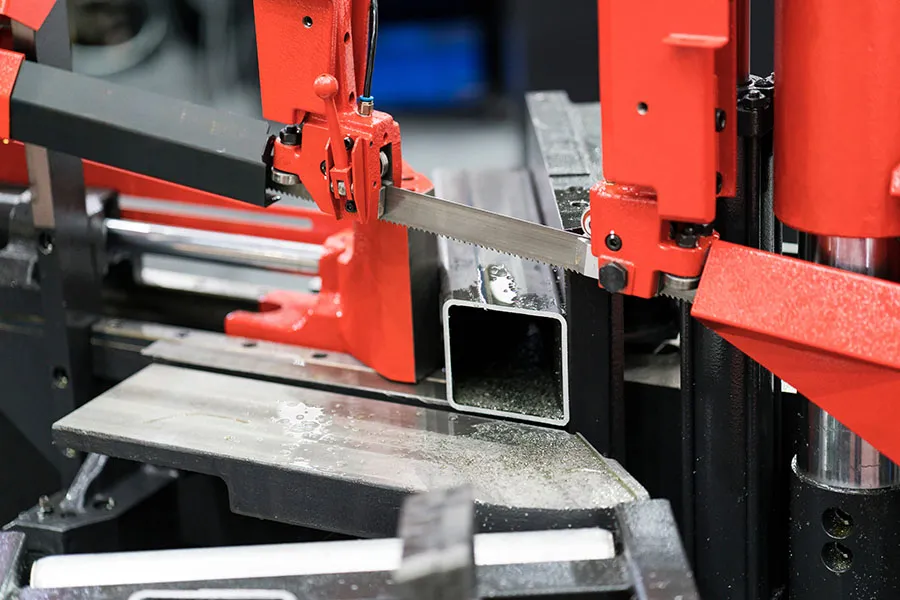
Band saws are a popular machine used in a variety of industries, including pipe cutting, furniture making, woodworking, and metalworking. There are generally four main types of band saws: reciprocating saws, circular saws, vertical band saws, and horizontal band saws. The saw blades used vary depending on the type of saw. Each type of saw blade serves a different purpose, depending on the application and the material to be cut. In theory, manufacturers of band saw blades and saws offer a wide range of options, including blades and saw blades for specific cutting tasks, so you can choose the most appropriate blade for each material. However, in the real world, most users rely on just one type of saw blade for everything from thin sheets and steel pipes to high-strength stainless steel. Today, we’ll explore the differences between band saw blades and other types of saw blades.
How to choose a steel band saw blade and what are the differences between a band saw blade and a band saw blade?
Each type of saw blade has different characteristics, with differences in length, thickness, and width of the saw blade. These numbers are based on industry specifications and are basically fixed. However, the characteristics of the saw blade vary from type to type, so we will introduce the characteristics of steel band saw blades and other types of band saw blades.
- Steel Band Saw Blades
Steel band saw blades, also known as bi-metal, are made from high-speed steel. They offer exceptional strength and high wear resistance, similar to having two blades. They are extremely versatile, particularly for cutting metals, capable of cutting relatively hard materials up to 40-45 HRC. Steel band saw blades are versatile and suitable for a wide variety of materials, offering high flexibility. - Carbide Band Saw Blades
Carbide band saw blades are capable of cutting materials with a hardness of 60-62 HRC. The teeth are formed into a backing material, then bonded to the teeth and ground to shape. They are commonly used for cutting aerospace materials such as nickel-based superalloys and titanium. Furthermore, carbide-tipped band saw blades offer exceptional cutting performance in hard steels and ultra-hard woods. Compared to steel band saw blades, carbide-tipped band saw blades offer faster cutting speeds, eliminate the need for blade replacement, and produce smoother cutting surfaces compared to steel blades.
The teeth of the band saw blade are important for its operation.
In general, in addition to choosing the material of the band saw blade, choosing the teeth of the band saw blade itself is also necessary. Choose from the TPI (Teeth Per Inch) value, which is the number of teeth on the saw blade in a length of 1 inch. Therefore, choosing the appropriate saw blade, based on information from the saw blade manufacturer, in addition to the saw blade type, the number of saw blade teeth, or TPI, must also consider the size of the object being cut that has contact with the saw blade. For solid workpieces, the width of the object being cut is measured. For objects being cut in the form of TUBEs, the thickness of the object is measured to determine its size.
- If you want to cut solid steel, such as solid shaft steel, mold steel, or steel to be used as a template, with a solid square or circular shape, you should use a rougher TPI saw blade with large teeth, which allows for faster cutting and better chip evacuation, such as 4/6, 3/4, 2/3, etc.
- Band saw blades are used to cut pipes or other shaped objects that are steel profiles. They cut objects that are not solid. The cutting surface is different from solid objects, such as when cutting pipes. The cutting surface will have less contact with the saw blade than with solid objects. Therefore, you should choose to use saw teeth with more teeth. This makes the cut smooth and reduces the problem of broken or chipped teeth. Commonly used saw blade teeth include 6/10, 5/8, 4/6, etc.
From the above, it’s clear that each type of band saw blade differs from the other. Furthermore, selecting the right saw teeth for different applications is crucial. In addition to selecting a quality band saw blade, it’s equally important to choose the right type of saw suitable for the type of work being cut. These two factors will significantly impact the number of pieces cut, their lifespan, and future costs. For more information, please contact IDDA MACHINE TOOLS CO., LTD., a skilled and experienced distributor. We import and distribute industrial machinery such as CNC lathes, CNC milling machines, plastic injection molding machines, sheet metal cutting machines, wire cutting machines, grinding machines, fiber laser cutting machines, and band saws, as well as all types of genuine spare parts and other tools. Our machinery meets ISO 9001 quality standards, and our team of expert technicians ensures that our after-sales service is our number one priority. Customers can be confident in our service.
Inquire about band saws
Tel : 02-315-4808 , 094-821-4821
Line ID : @idda.machine
Facebook : เครื่องจักร CNC BY IDDA Machines TOOLS
Email : marketing@idda.co.th